How to Connect Geological Data Across Mining Applications
Explore how datashed and dsCONNECT create a trusted source of geological data for modelling, mapping, analysis and reporting workflows within mining and exploration companies.
Drillhole data, geological logging, sampling, assays and QA/QC may be managed in a central geological database, while geologists, GIS specialists, geochemists and mining engineers use different applications for modelling, mapping, analysis and interpretation.
Each application may work well for its intended purpose. The challenge comes when the same geological data needs to move between them.
Without effective connectivity, teams can spend significant time exporting files, formatting data, importing datasets and checking that information matches. Over time, this can lead to duplicate datasets, outdated information and uncertainty about which version should be trusted.
The answer isn't replacing the applications your teams already use. The answer is connecting them to a trusted source of geological data.
A more connected approach allows mining companies to continue using the specialist applications their teams rely on, while making trusted geological data easier to access across those workflows.
Why do Data Silos Occur in Mining Operations?
Geological and mining applications are generally designed to solve different problems.
A geological database manages drillholes, geological samples and assays. A modelling application is designed to build geological models, while GIS software focuses on spatial information and geochemical applications support interpretation.
The problem occurs when information needs to move between these systems. A typical disconnected workflow looks like this;
Database → Export → Format → Import → Analyse
The process may seem manageable at first, but geological data is constantly evolving.
New drillholes are completed. Assay results arrive. Geological interpretations change. QA/QC data is reviewed. Every update can create another cycle of exporting, reformatting and importing data into downstream applications.
Over time, this can lead to:
- Multiple copies of the same dataset
- Outdated information being used
- Repetitive data preparation
- Delays to modelling and analysis
- Additional effort validating datasets
The issue isn't the quality of the original data. It's the challenge of keeping that data consistent across multiple applications.
How Can Mining Companies Connect Geological Data Across Applications?
Instead of creating separate datasets for each workflow, mining companies can establish a single source of geological data and connect specialist applications directly to it.
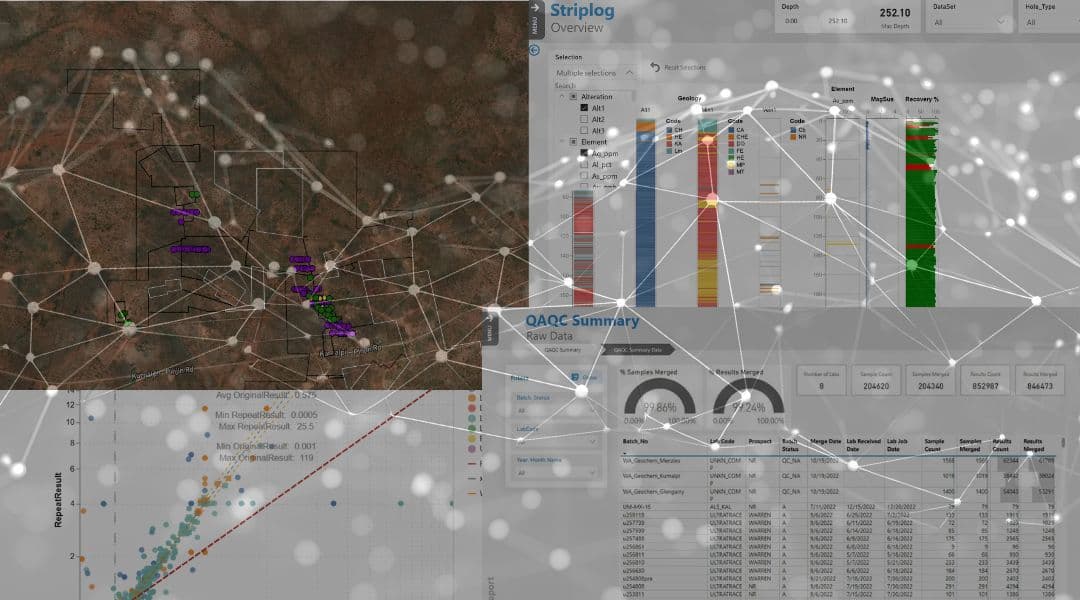
For organisations using maxgeo's flagship geological data management platform, datashed, dsCONNECT connects trusted geological and mining data with the specialist applications used across technical workflows. Through ODBC and API connectivity, dsCONNECT enables data access in applications such as Leapfrog, ArcGIS, QGIS, Micromine, Surpac and ioGAS, helping teams work from a consistent and trusted source of information.
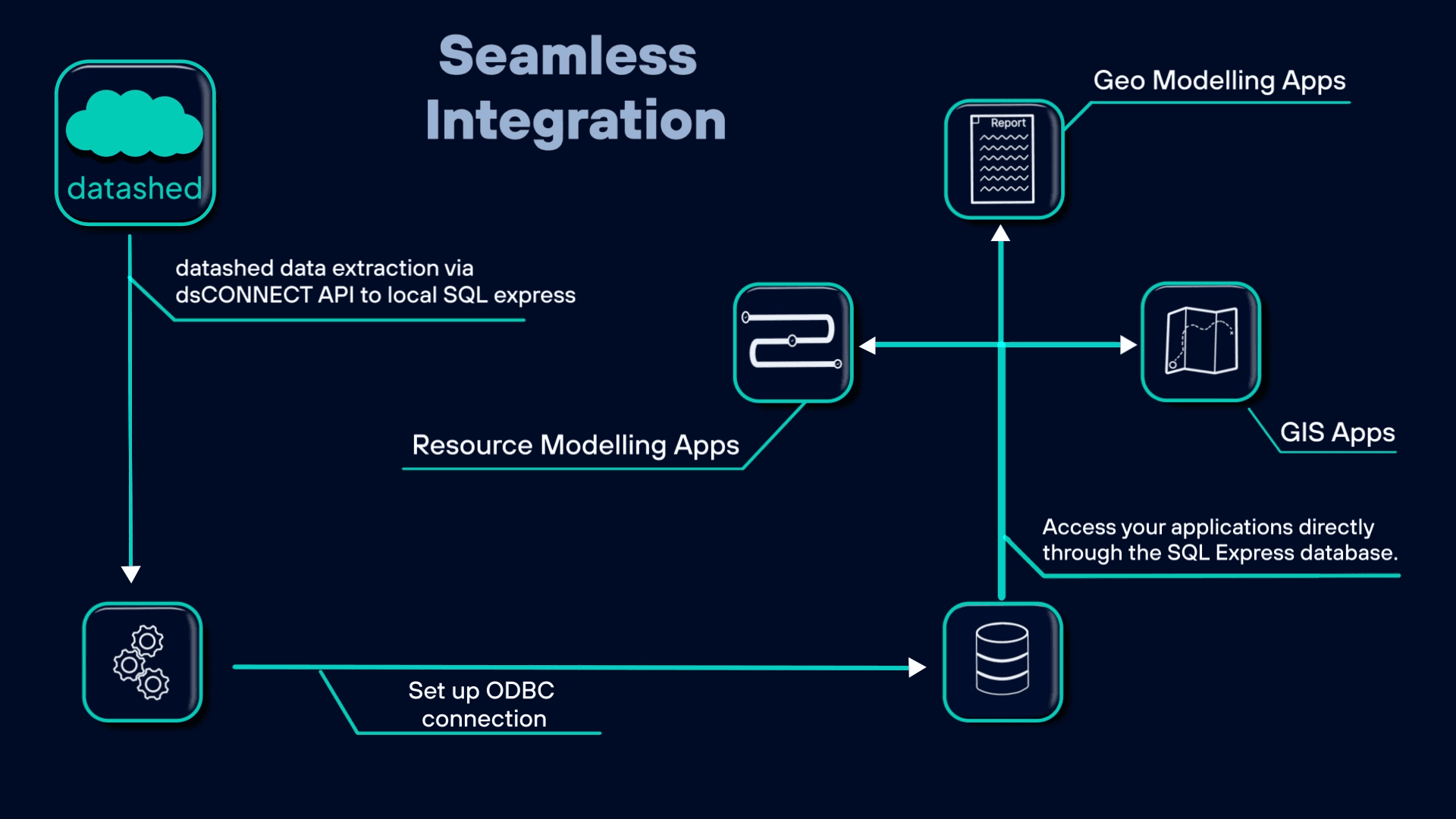
dsCONNECT also supports configuration sharing, scheduling and API tools to help teams maintain consistent and repeatable data workflows.
The workflow becomes:
datashed → dsCONNECT → Third Party Applications → Analyse and Report
Rather than manually moving data between systems, teams can access trusted information from a central source.
Do You Need to Replace Existing Mining Software to Improve Data Integration?
One of the biggest misconceptions about data integration is that it requires replacing existing software.
In reality, the applications used by geologists, GIS specialists, geochemists and mining engineers are often the best tools for their specific tasks. Geologists may prefer Leapfrog for modelling. GIS teams may rely on ArcGIS or QGIS. Geochemists may use ioGAS, while mining teams work in Micromine or Surpac.
The goal behind maxgeo’s connected solution is to ensure all teams can all access the same trusted geological and mining data. By connecting applications to a central data environment, organisations can improve data accessibility and data quality without disrupting established workflows.
What Are the Benefits of Connected Geological Data Workflows?
When geological data flows more effectively between systems, teams can spend less time managing data and more time using it.
Benefits can include:
- Reduced manual data preparation
- Fewer duplicate datasets
- Faster access to current information
- More consistent data across workflows
- Improved collaboration between teams
- Greater confidence in reporting and decision-making
A connected approach helps ensure that trusted geological data is available where it's needed, when it's needed.
How Does datashed Support a Single Source of Truth?
datashed provides a central environment for geological and mining data management. dsCONNECT extends that environment by connecting datashed to third party applications used across technical teams.
The result is a more connected workflow where geological data can move more effectively between systems, without relying on repeated exports, spreadsheets or manually maintained datasets.
Mining companies don't need more software. They need the software they already use to work together more effectively.
With datashed and dsCONNECT, teams can maintain a trusted source of geological data while continuing to work in the applications they know and rely on.